America is Divided in Public but Grieving in Private
On screens, America is a knife fight. Every post is a provocation; every clip is an indictment. We are trained to perform our anger as if it were a civic duty. There are a thousand voices in your pocket selling you the adrenaline of a divided nation, certainty as a product, outrage as a business model, insulated from the consequences of what their words ignite.
And we hear a lot about Two Americas: red vs. blue, rich vs. poor, rural vs. urban, black vs. white.
That is not to say that the traditional divides don’t exist; the disparities in wealth, race, and geography are real and devastating, but let me introduce a different way to think about it. One I found while spending the last three years on the road in the places where that certainty goes to die.
Across 28 states, I’ve had hundreds of unguarded conversations and thousands of ordinary encounters in diners, coffee shops, bars, barbershops, ballgames, terminals, checkout lines, and more. One part participant. One part observer.
What I saw was not a divided country. It was a grieving one.
And what I heard underneath the anger we broadcast was loss, the same two losses, repeatedly: the loss of a felt future, and the loss of belief that institutions will repair what they broke.
I know what you might be thinking: but what about all the think tank reports and mainstream media polls that say we are a divided country? Sure, frame the question correctly, and you’ll get the answer you want. Undoubtedly, there is motivation and plenty of money in selling division. But the better questions are: who are the leaders not dividing our country? And where are they showing up?
And let me promise you this: if you stay with me through the anatomy of this loss, I will show you where the repair is already beginning. I found a relentless, quiet grit on the street level that the screens refuse to see, a version of hope that doesn’t show up in a spreadsheet, but is holding the country together nonetheless.
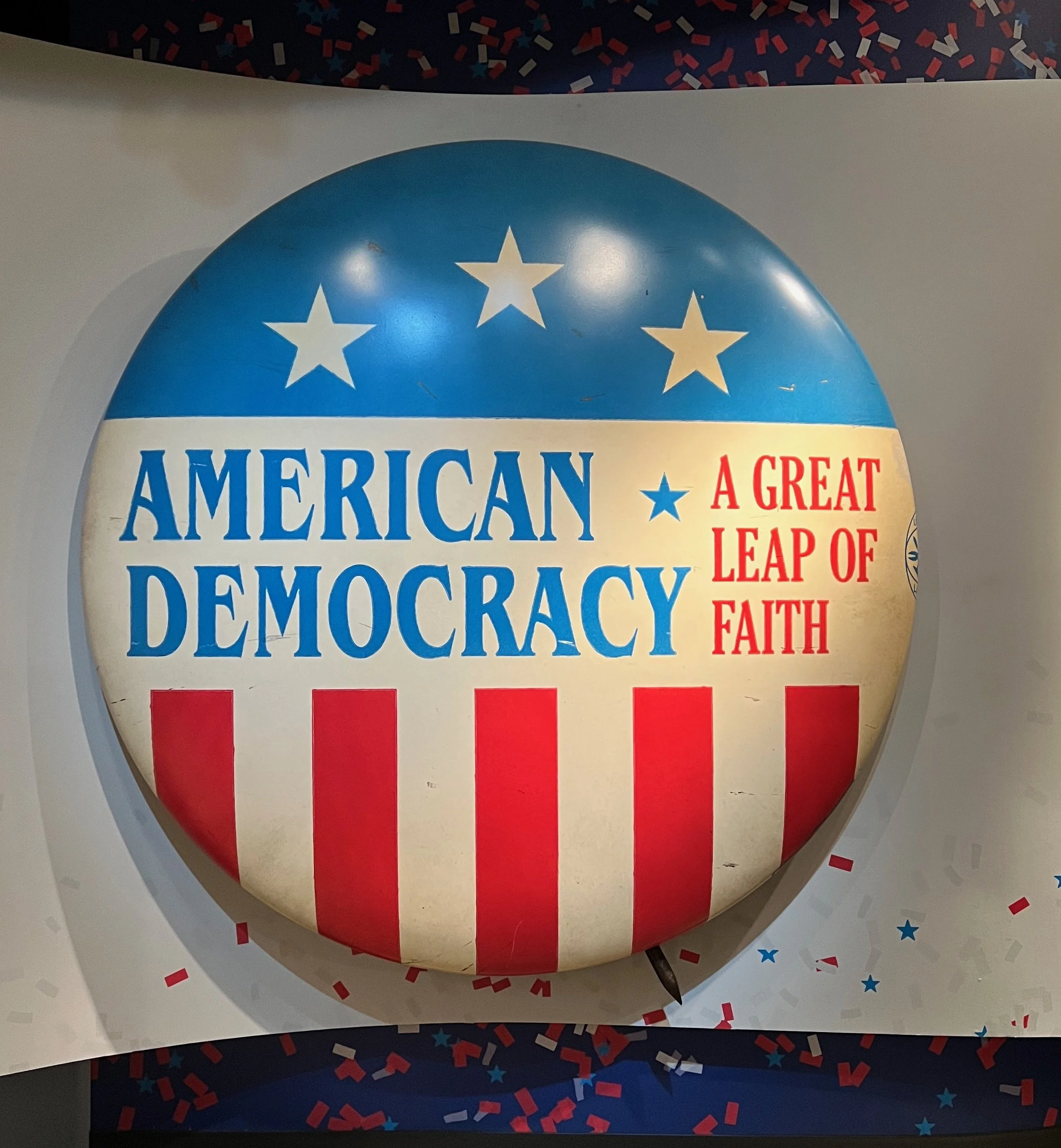
Smithsonian's National Museum of American History, Washington, D.C. (Michael Holland)
The Two Losses
I call it grief, though most of the people I've met wouldn’t use that word. They call it ‘being fed up,’ ‘being done,’ ‘checked out,’ or just ‘the way it is.’ But grief is the only word that fits the hollowed-out feeling of a promise that has been unceremoniously retracted.
It isn’t ideological. It’s structural. It shows up everywhere. Left, right, apolitical, religious, secular, urban, rural, the surface arguments change. The mourning underneath does not.
Why? Because America runs on a set of promises so familiar we stop noticing them until they fail. Work will lead somewhere. The system will be fair enough, a promise that was always held more tightly by some communities than others, but one that functioned as a shared national orientation. Your kids will have more options than you did. If you follow the rules, you will be protected. If you contribute, you will belong.
In conversation after conversation, I found that everyone is grieving something: a story, a certainty, a version of America they thought was durable.
If you believed hard work guaranteed stability, the math of today’s economy broke that covenant.
If you believed in the melting pot, the reality of ICE raids, exclusions, and conditional belonging shattered that promise.
If you believed institutions were engines of progress or protection, their failures taught you otherwise.
If you believed the future would be bigger than the present, you feel the horizon narrowing.
If you believed your town was a permanent anchor, the hollowed-out Main Streets and shuttered factories proved that even ‘home’ is subject to the whims of a global ledger.
If you believed the climate was a stable backdrop to your life, the red skies of fire season and the erosion of your coastline have rewritten the map of your safety.
And what looks like division from a distance is, up close, shared heartbreak interpreted through different vocabularies. When the future feels thinner, and repair feels unlikely, we become easier to provoke, easier to shame, easier to recruit.
The phone does not invent the pain. It converts it into content. It turns loss into grievance, grievance into identity, and identity into a public brawl we mistake for the whole country.
The Felt Future
As a member of Gen X, I grew up during the Cold War. Democracy vs. communism, capitalism vs. socialism, freedom vs. oppression. As I wrote in Finding America, I remember the celebrations around our Bicentennial in 1976, and there’s more. I also remember the long gas lines determined by your license plate, the Iran hostage crisis, the famous Ronald Reagan campaign ad, “It’s morning in America,” Al Michael’s iconic “do you believe in miracles...yes!” as the U.S. Men’s Hockey team defeated the Soviet Union in the Winter Olympic’s semi-finals, Live Aid’s televised attempt to address famine in Ethiopia, the harrowing silence after the Challenger explosion, the surreal, sledgehammer-swinging joy of the Berlin Wall coming down.
Growing up during that period instilled an underlying determination to defeat a common enemy. A quiet assumption that tomorrow will be navigable. That effort will still count. That the steps you take will still lead somewhere. Not only optimism, but orientation.
For much of the last century, America’s dominant promise was industrial and upward: stability through work, belonging through conformity, progress as default. That promise certainly never covered everyone equally, but it shaped the national story. This ‘felt future’ was a map drawn in a specific ink: a suburban lawn, a forty-year career, a predictable ladder. It was a majority-white blueprint. That map was exclusive and often cruel, but it was legible.
Then came disruptive moments that served as early warnings: the Dot Com bust that evaporated ‘new economy’ wealth overnight, the 9/11 era that traded our privacy for a precarious sense of security, and the 2008 housing collapse that proved the ‘ownership society’ was built on sand. By the time the gig economy arrived, the unspoken contract, work for one company, and they will take care of you, wasn’t just broken; it was history. We traded the ‘predictable ladder’ for a ‘precarious hustle,’ and called it flexibility.
And the last decade has been a masterclass in disillusionment. We have lived through ten years of whiplash: the chaotic disruption of the first Trump term, the collective trauma of a pandemic that showed us just how fragile our safety nets were, and the subsequent years of a Biden administration that many believe failed to provide the “return to normalcy” it promised. And brought to us live on our screens, the Russian invasion of Ukraine, the genocide in Gaza, recent military strikes in Venezuela, Nigeria, Somalia, and let’s not forget about Iran and Greenland, all while millions lose their jobs or healthcare.
A recent CNN/SSRS poll found that 58% of Americans view the first year of Trump’s second term as a failure. We aren’t just watching a political shift; we are watching the final shredding of the idea that any one leader will save us.
The economy, our public trust, and our standing in the world have all been collateral damage in a fight for a throne that remains, essentially, empty. Void of any strong national leaders across government or business that view the public as a constituency to be served rather than an audience to be captured. When the duty of care is replaced by the desire for engagement, the office of the leader becomes a stage for the performer.
They aren’t coming to save us
The second loss is more corrosive: the loss of belief that national institutions will repair what they broke. And when that belief collapses, authority doesn’t disappear; it rots.
Look at Washington. The Cabinet is straight out of a reality show casting department. And not a good one. Secretary of State Marco Rubio is competing with Vice President J.D. Vance as MAGA’s heir apparent. Secretary of Defense Pete Hegseth turns every action into an audition for his personal brand. HHS Secretary Robert F. Kennedy Jr. has gutted public health infrastructure while measles is on the rise. Attorney General Pam Bondi has eviscerated the Justice Department’s moral backbone, functioning not as America’s attorney but as the President’s defense lawyer. And let’s not forget Howard Lutnick and Scott Bessent, gaslighting Americans about the state of the economy while inequality deepens and instability spreads.
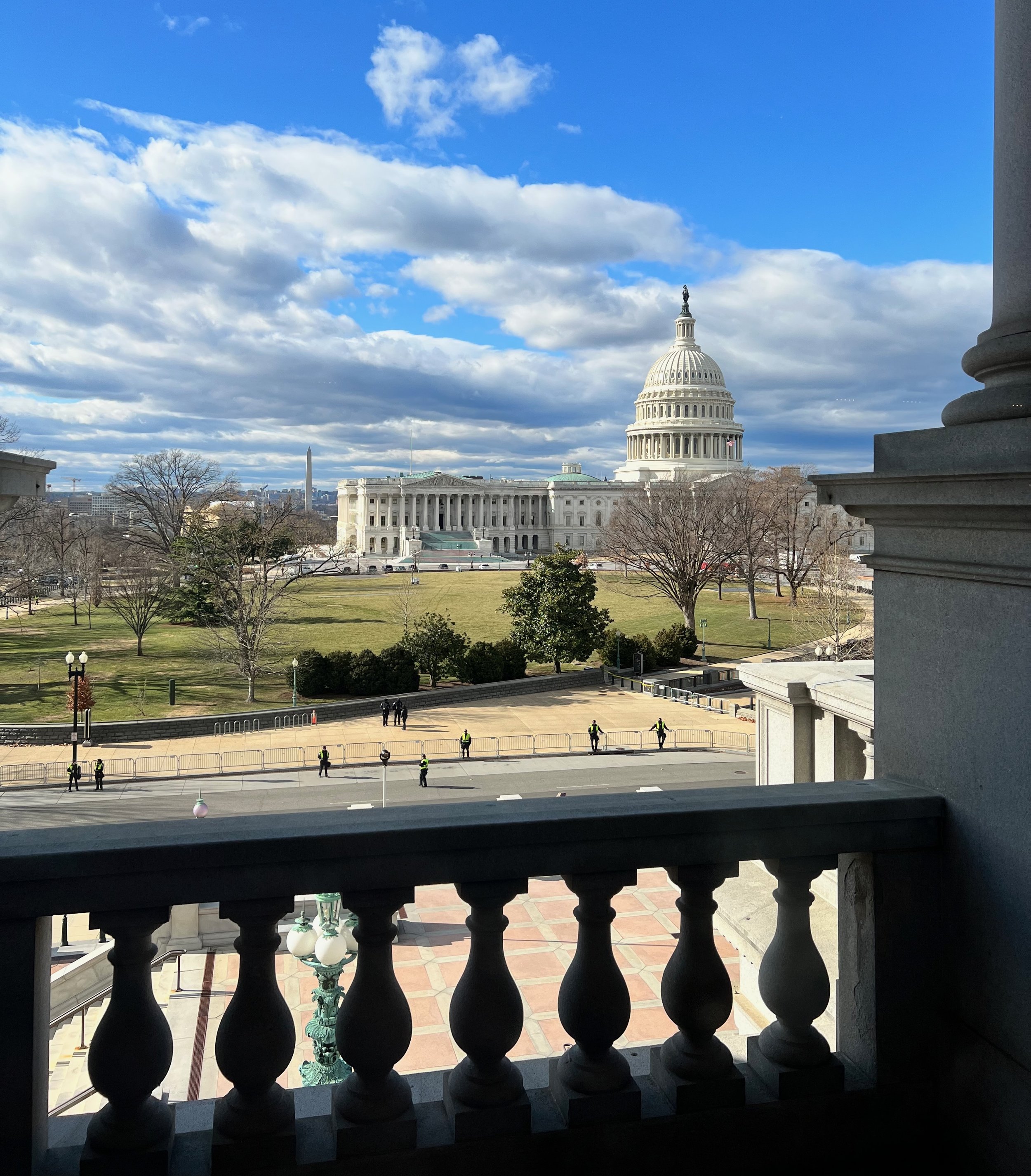
In Congress, Speaker Mike Johnson and Senate Majority Leader John Thune have redefined leadership as cowardice dressed up as strategy. Minority Leaders Chuck Schumer and Hakeem Jeffries are equal parts uninspiring and ineffective, incapable of galvanizing their party, let alone the country. All are standing idly by while the Administration unleashes raids and crackdowns in Minneapolis. Across the aisle, America’s political leadership is dominated by people whose only instinct is self-preservation.
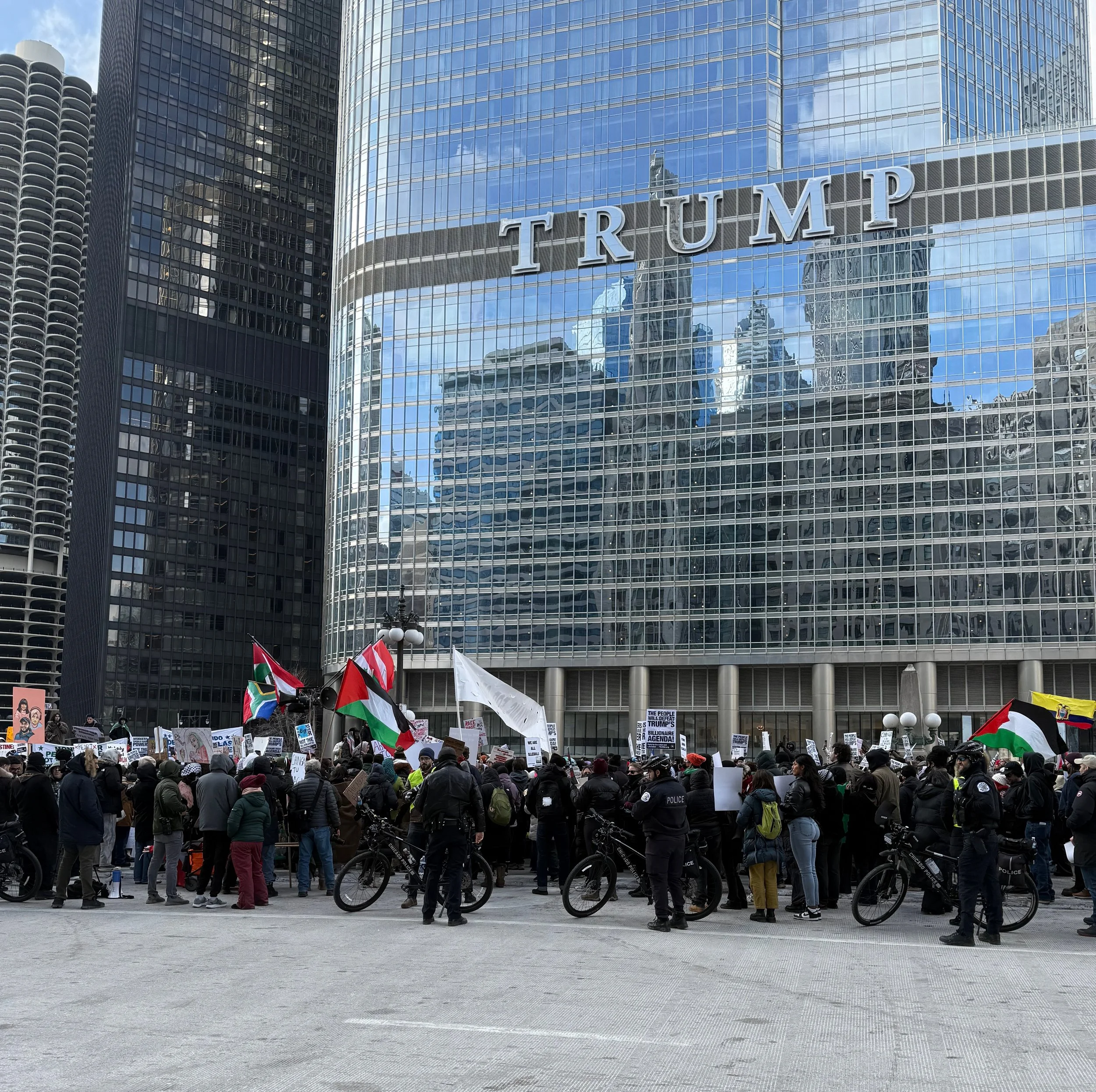
And the C-suite is no different. We have seen a wave of fear-based actions that trade genuine leadership for craven placation. Company after company, from Ford and Lowe’s to John Deere and Molson Coors, have backed off their social and environmental commitments to placate the Administration. Time and again, we have seen CEOs bend the knee. Besides Ben Cohen and Jamie Dimon, I’m always struggling to name one CEO who has consistently demonstrated integrity and courage rather than the path of least resistance. For the overwhelming majority, the strategy they have chosen is to worry less about offending customers or employees, many of whom are increasingly younger, more diverse, and vital to a business’s long-term success, in order to bury their heads in the sand to avoid a Truth Social post.
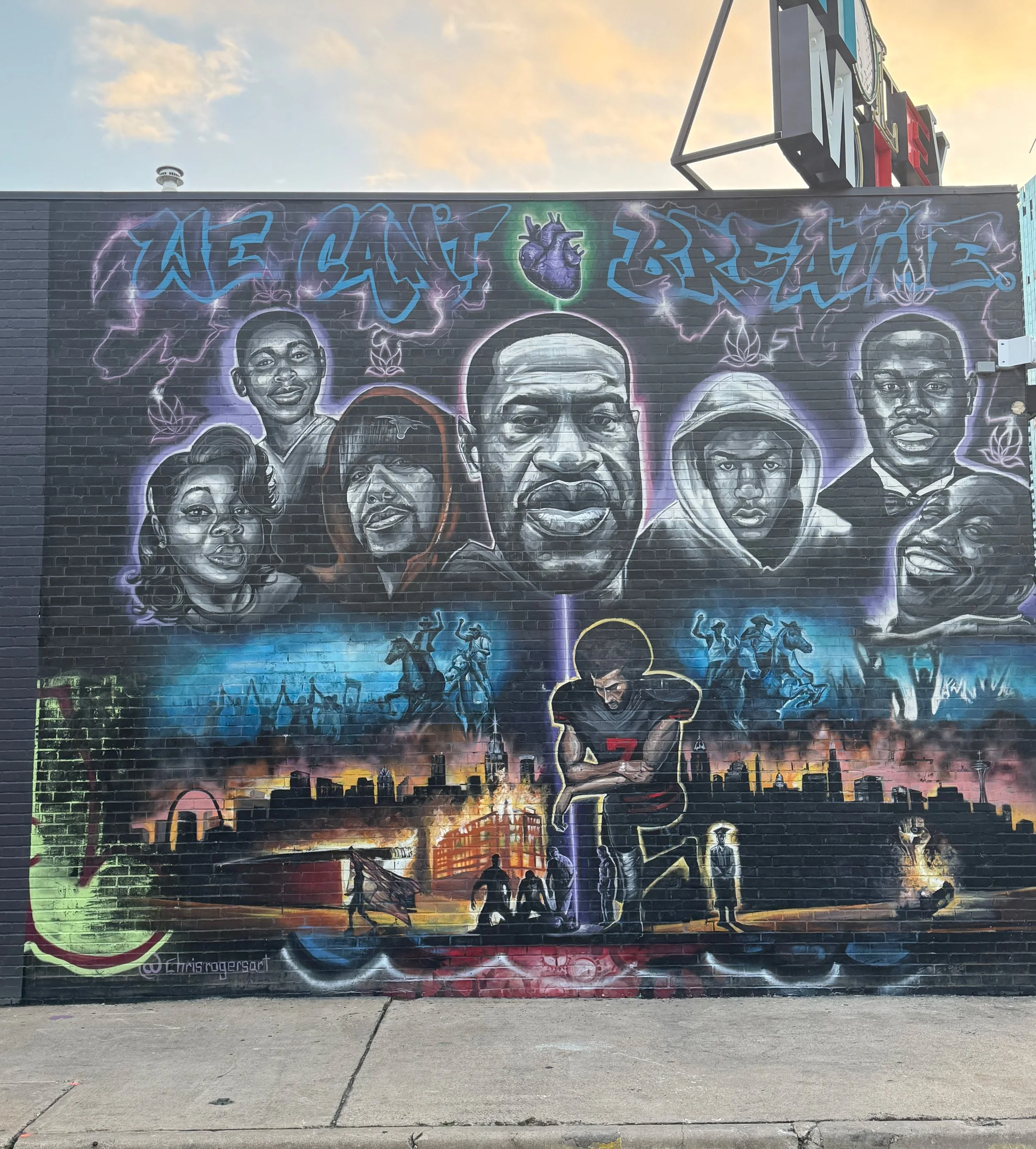
We’ve also seen the rise of the ‘Tech Bros’ infiltrating and influencing the Administration. Elon Musk, David Sacks, Peter Thiel, Chamath Palihapitiya, Palmer Luckey, and others have repositioned themselves not as innovators but as architects of a new oligarchy.
And if we want to nitpick, Mr. Musk, Mr. Sacks, Mr. Thiel, and Mr. Palihapitiya are all naturalized American citizens, a group that once sought the “felt future” of this country, and now they seem intent on dismantling the very institutions that protected it. But I digress.
While all are undeniably successful as investors and disrupters, they have mistaken algorithmic or market dominance for moral authority. When the “moral compass” of American business is calibrated by a billionaire’s ego, the throne of leadership is truly vacant.
The Rise of the Zero Risk Prophet
When formal authority loses legitimacy, informal authority rushes in. The vacuum fills with people I refer to as Zero Risk Prophets. People paid to be certain, loud, and unaccountable. The list is endless, from Joe Rogan, Laura Loomer, and Ben Shapiro to Nick Shirley, Matt Walsh, and so many more. Much to my chagrin, these are the ones the algorithm has determined I need to see regularly, but I do love me a Dave Smith rebuttal. And, I mean, who isn’t excited for Dan Bongino’s return to podcasting after his performative and brief tenure as Deputy FBI Director, or any time that Bill Ackman posts a 15-paragraph novella on his issue of the day.
Let’s face it. All are highly effective in tapping into that primal need for a scapegoat. Armed with a podcast, a byline, and social media handles, they have seemingly endless viewpoints on everything. The more incendiary the better, at least from their standpoint, since it drives engagement. No duty of care. No constituency they must serve, only their audience and their customers, for any number of books, subscriptions, or appearances. They can escalate because they never have to clean up the aftermath. And the algorithm rewards them because outrage is frictionless power: it feels like agency without requiring repair.
They feed the division because it is lucrative. And why not? When your only focus is on monetizing the friction between neighbors, why not capitalize on a divided country? The Zero Risk Prophet is an arsonist who sells fire insurance. But notice: if their rhetoric breaks a community, they aren’t the ones who have to clean the glass. If their skepticism ruins a life, they simply delete the post and pivot to the next trend. They have traded a duty of care for a duty of engagement.
The Republic of Street Level America
That duty of care? It’s not in Washington, Wall Street, Hollywood, or Silicon Valley anymore. It’s on the street. And this is what gives me hope about this country of ours.
Because while the national leaders are busy monetizing friction, feeding grievance, and performing from stages, something else is happening in the places where the algorithm loses its grip, in the creases of America, the corners of counties, the aisles of grocery stores, the parking lots after Friday night football games.
In those 28 states, I didn’t find people waiting for a savior to descend from Washington or a corporate boardroom. I found people who had stopped looking upand started looking across. I found something you won’t see trending: a quiet, relentless grit that refuses to be turned into content.
I call this the Republic of Street‑Level America.
Because in diners and dive bars, barbershops, coffee queues, ballgames, and checkout lines, the “knife fight” of the screen often vanishes. The algorithm is engineered to manufacture enemies. Real life is engineered to make neighbors.
Yes, I get asked all the time, “Where has been your favorite place to live?” And I can easily give you a travelogue of fun places to visit, museums to see, and experiences to have. But something else happens when you move beyond the travelogue and immerse yourself in a three-year, street-level reckoning of the American experience. The radical act of staying curious long enough to hear and see what people aren’t posting.
When you live as a participant-observer, each home becomes a little part of you. Each is a classroom. The ordinary becomes the evidence. And slowly, piece by piece, you stop chasing headlines and start listening for heartbeats.
You begin to feel like a part of the community, even if only for a month. Up close, the person next to you isn’t an “ideological enemy,” they are a neighbor who still shows up on Monday, still takes their kid to practice, still pays their rent, still walks their dog, still carves happiness out of small victories.
I’ve seen the exact same pride in the eyes of parents watching their children sing the national anthem at an Iowa Wild hockey game in Des Moines and at an El Paso Chihuahua baseball game in the borderlands.
Different accents. Different jerseys. Different politics. Same pride. Same hope.
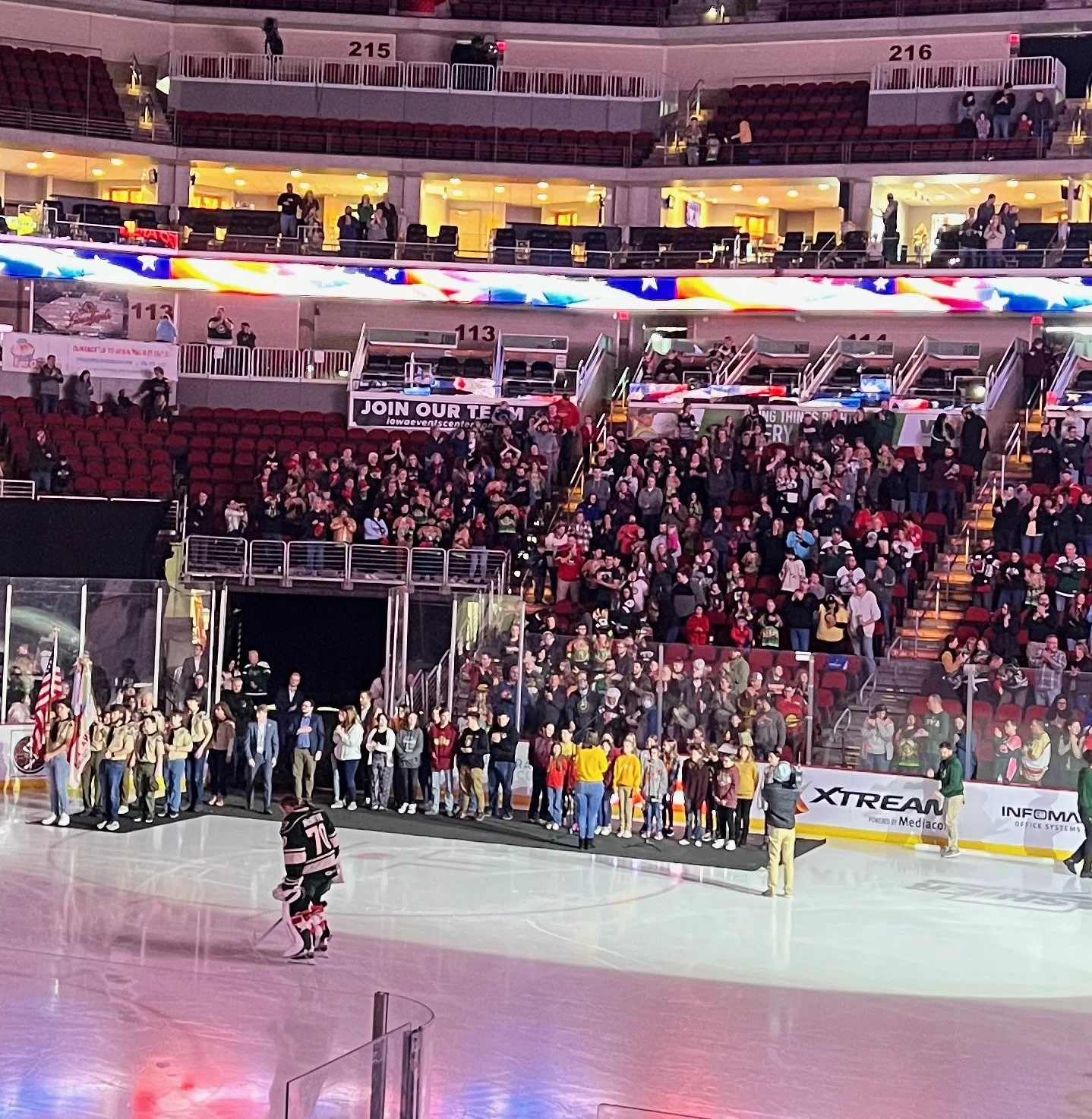
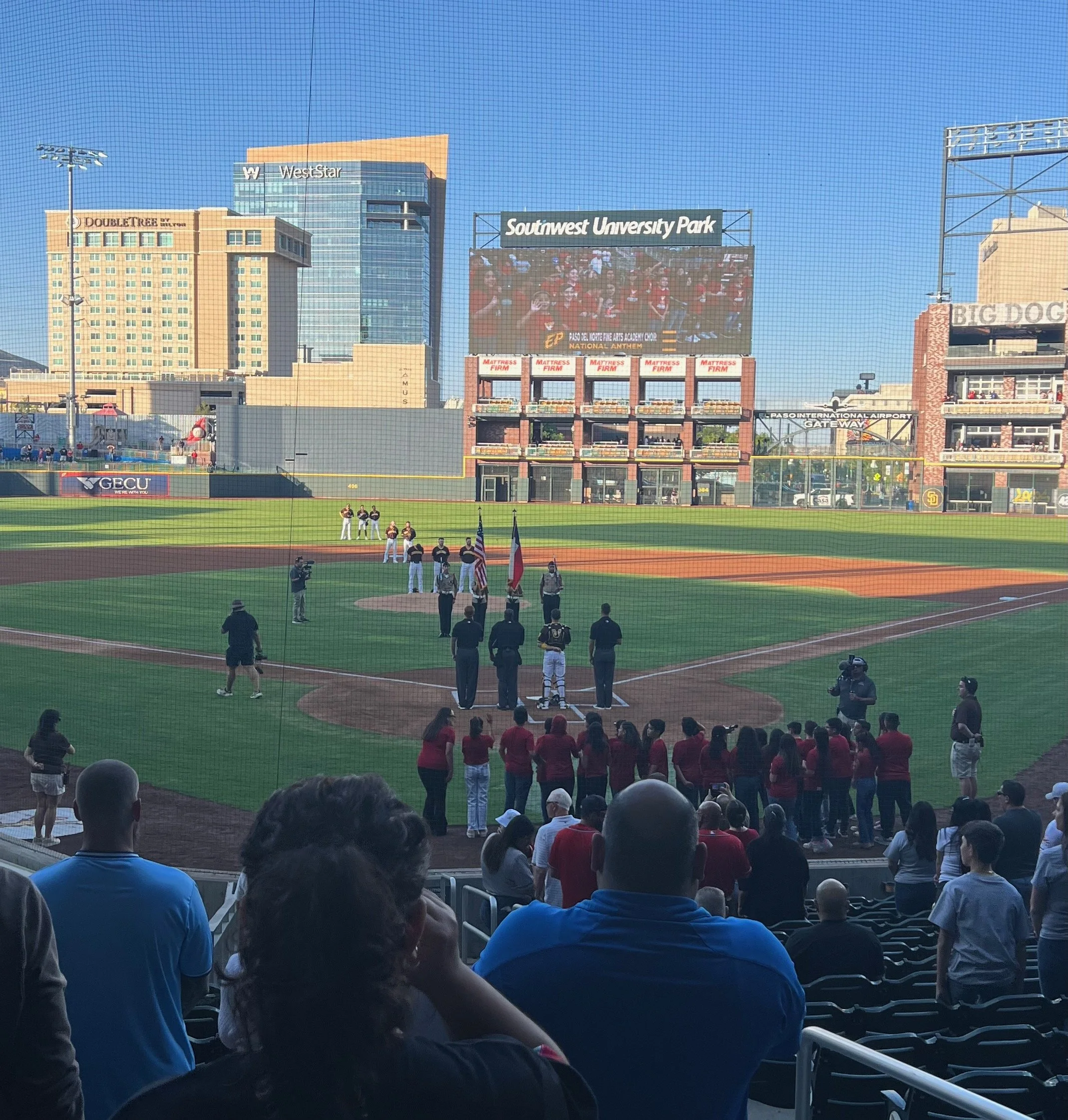
This isn’t unity manufactured by pundits or play-acted on Silicon Valley stages. This is relational coherence built from the ground up, the dirt‑under‑the‑fingernails kind, not the hashtag kind.
And an interesting thing happens when I meet people and begin telling my nomadic story of life in a new location every 4-6 weeks. A mixture of surprise and confusion, along the lines of, “Wait, what are you doing?” But in that moment of curiosity, the ‘screen’ breaks and they open up. Because under all that noise and division, they are hungry to be seen. Not as voters, customers, or metrics, but as people.
The conversations rarely mirror what is trending on Twitter (I still don’t think of it as X). We don’t talk about the “Collapse of Democracy”; we talk about what’s happening on Main Street. We don’t debate “Global Macroeconomics”; we talk about the local diner changing owners. We don’t talk about the latest brand campaign; we talk about the local rivalry for the Friday night game. These conversations are the “relational coherence” that the dashboard misses. They are talking about life, while the leaders are talking about leverage.

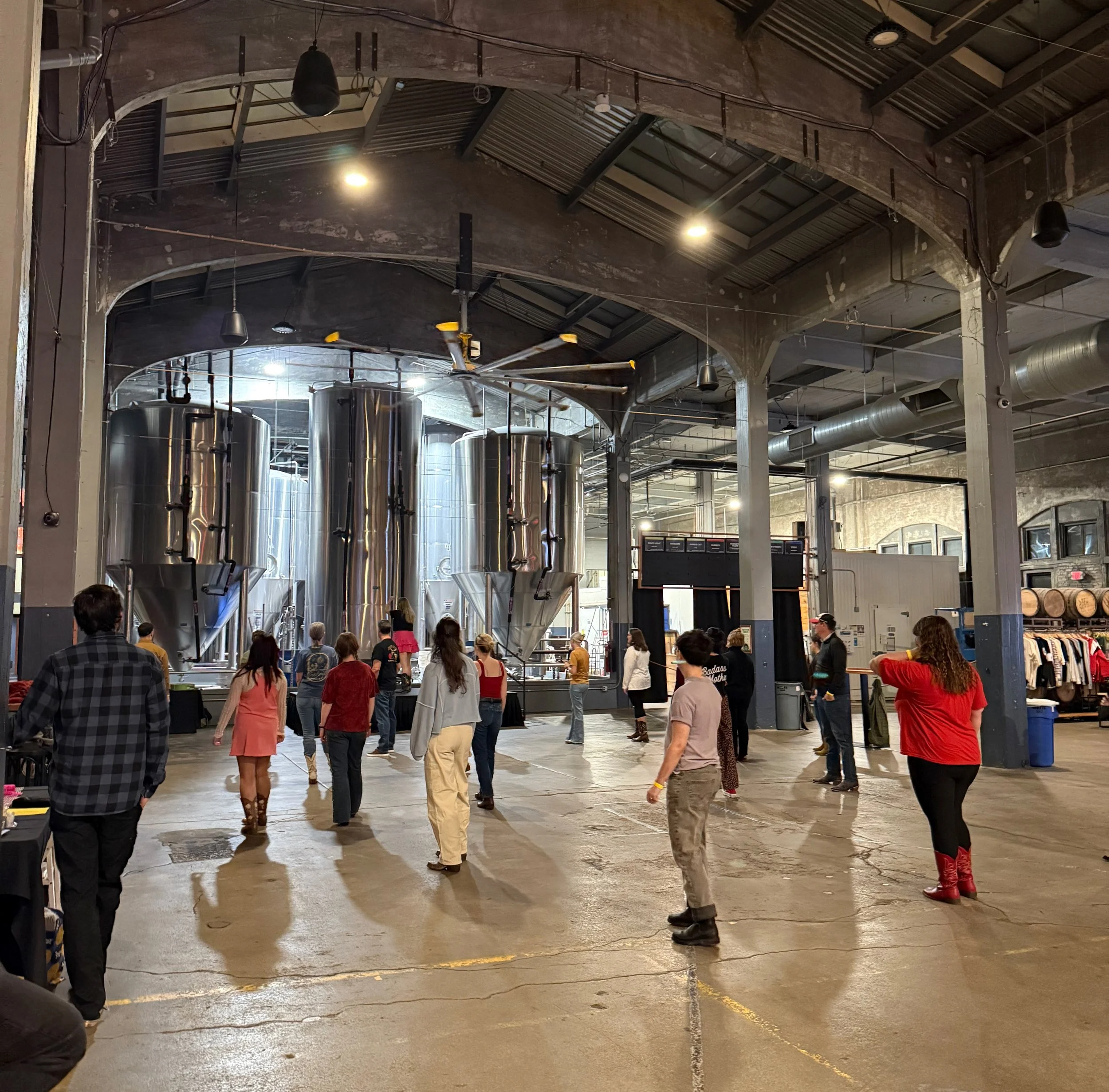
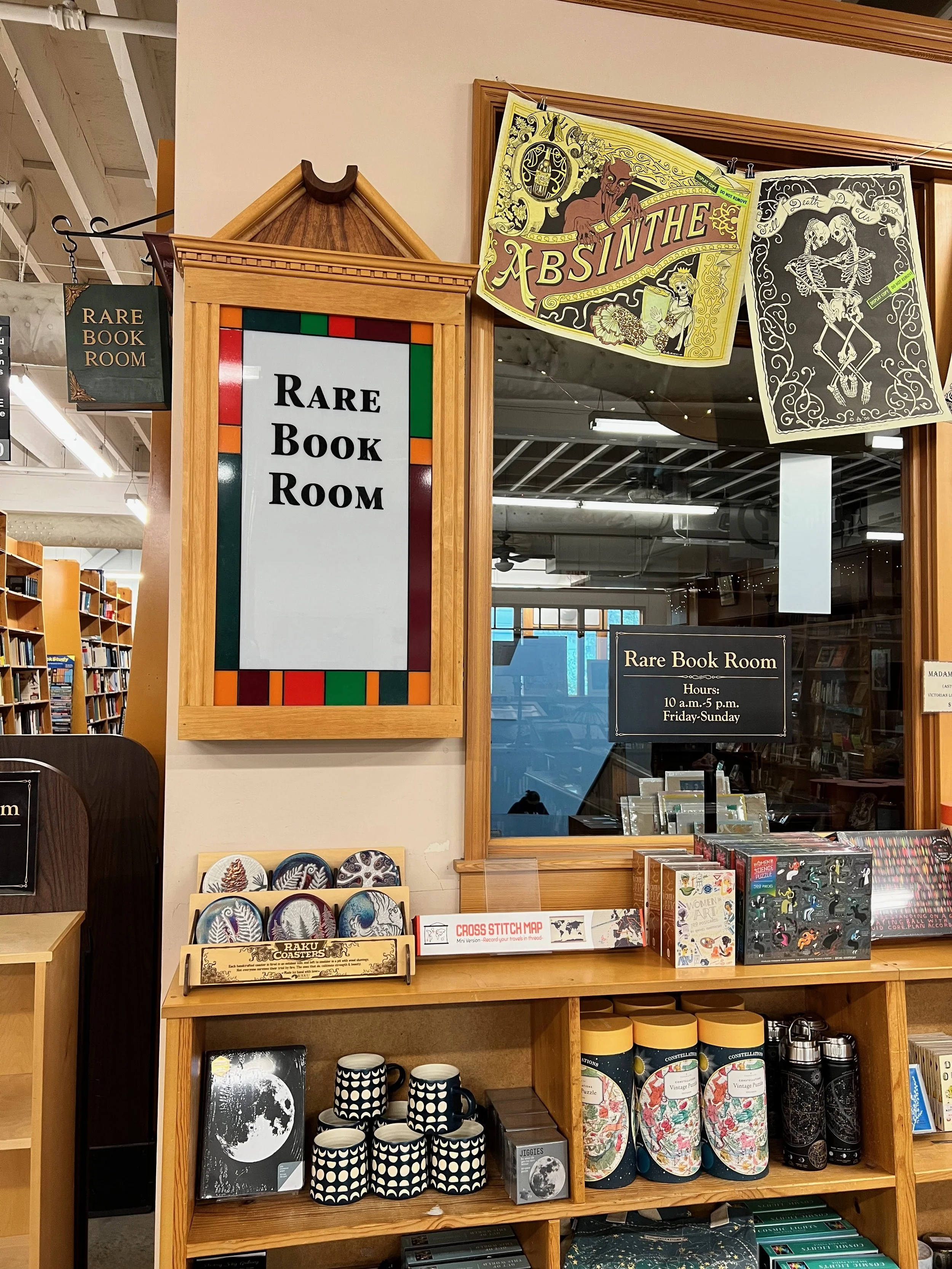
And these conversations happened everywhere from the border to the mountains, the Great Plains, the Midwest, the Pacific Northwest, the Northeast, and the South. Blue states. Red States. Purple cities. At the Pizza Saloon in Conshohocken, PA, the infield at Talladega Superspeedway, pizza cooking lessons in Chicago, Lunar New Year parades in Boston and Washington, D.C., line dancing night at the Rhinegeist Brewery in Cincinnati, the aisles of Powell’s Book in Portland or Family Dollar in Richmond, museum tours, baseball games, kitchens, dining room tables, and even the front seat of a police cruiser on a highway in South Dakota while waiting for my speeding ticket to print (no judgements please).
One of my favorite memories so far has been the ‘7 AM Club’ in Biggby Coffee in Dayton, OH. I would look forward to this every weekday when I would sit with members of the Dayton Police Department as we drank our morning coffee and talked about everything from what was happening around town to memorable moments in Dayton, upcoming trips or concerts, and our families and favorite sports teams.
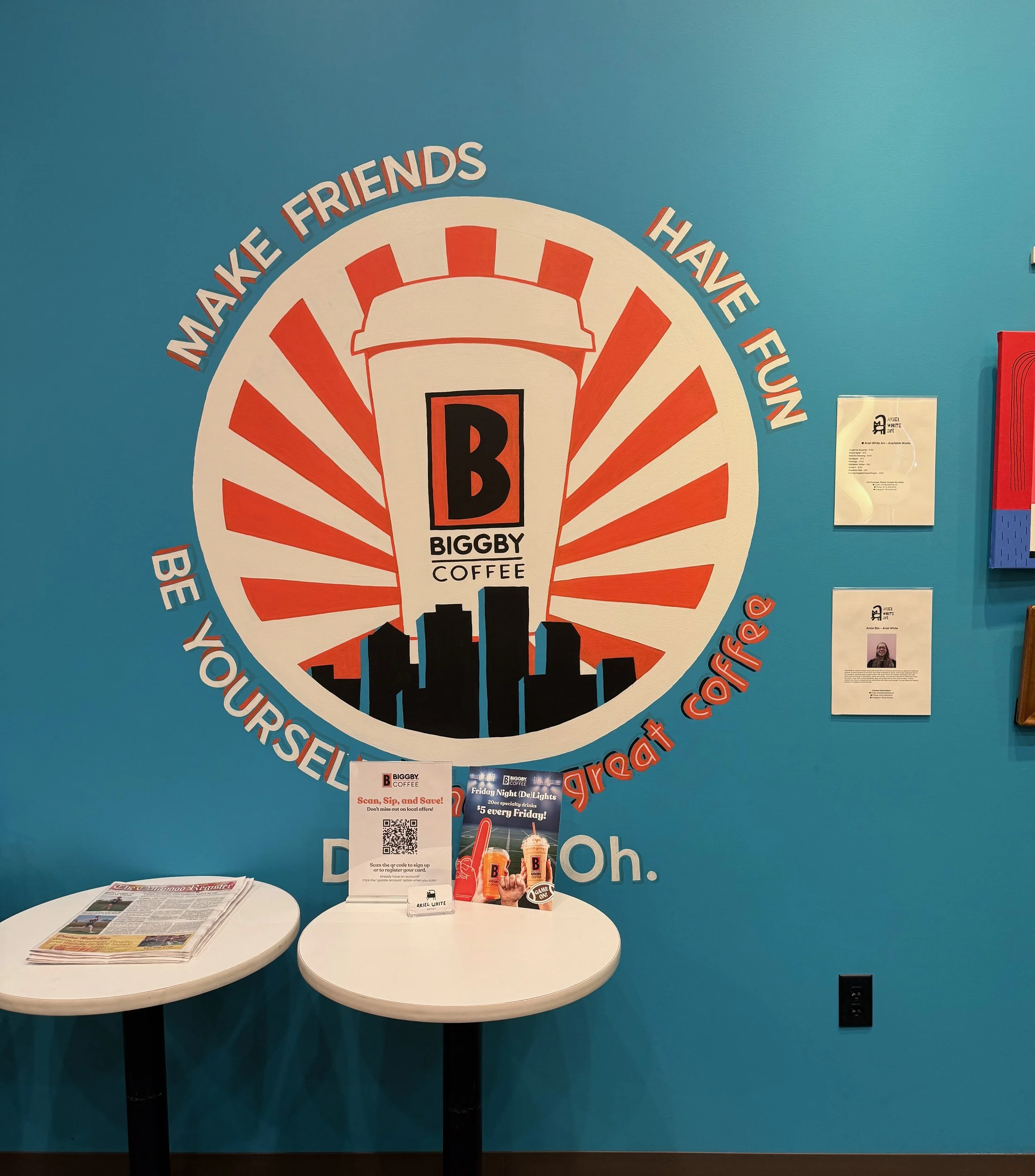
Biggby Coffee, Dayton, OH (Michael Holland)
The Great Misread
And yet here we are. As 2026 unfolds, we will celebrate our 250th birthday and hold the midterm elections amidst a cacophony of competing “Americas.” The debate will ensue on “What is America?” “What are American values?” Who gets to be called American?” One side will sell a story of “Restoration” while the other sells “Resistance,” both hoping to capture our attention before the sprint to the 2028 elections, the first time since 1980 that will not include a member of the Bush, Clinton, Obama, Biden, or Trump families. The very soul and direction of America is at stake.
The great misread of our national leadership in Washington, in the C-suite, and across the digital landscape is that they have stopped seeing people. They see numbers. They see churn. They see optimization.
They are governing for Public America because they believe the power is consolidated on the screen. But Street Level America is where the consequences live. If we want to reorient, we must stop asking Public America for permission to be neighbors. We must trade the certainty of the Zero Risk Prophet for the curiosity of the Street. We must realize that while we cannot fix the empty throne in Washington today, we can fix the orientation of our own blocks. We do this by keeping our skin in the game and our eyes on the person next to us.
And here is the unvarnished truth that almost no leader is willing to name:
A grieving nation cannot be led by strategies built for a divided one.
Originally published on Substack on January 20, 2026
